2 February | World Wetlands Day
World Wetlands Day comes around each year as a reminder of what we stand to lose, but this year in the Mediterranean, it’s also about what we’re determined to save.
‘Wetlands for Our Common Future’ is this year’s theme, and in the Mediterranean, that future is being built right now. From rice paddies in Spain to salt-crusted coastlines in Egypt to sensor-equipped fields in Portugal, the answer to what comes next is taking concrete form.
Since 2018, PRIMA has funded eight projects directly focused on wetland-based farming systems, mobilizing 81 research institutions and farming organizations across the region with a total budget of €15.54 million.
Last year, PRIMA took a further step and bet on the wetlands, and dedicated one funding call for the wetlands under the topic: “Enhancement of Sustainable Farming Systems within Mediterranean Wetlands for Conservation and Coexistence”.
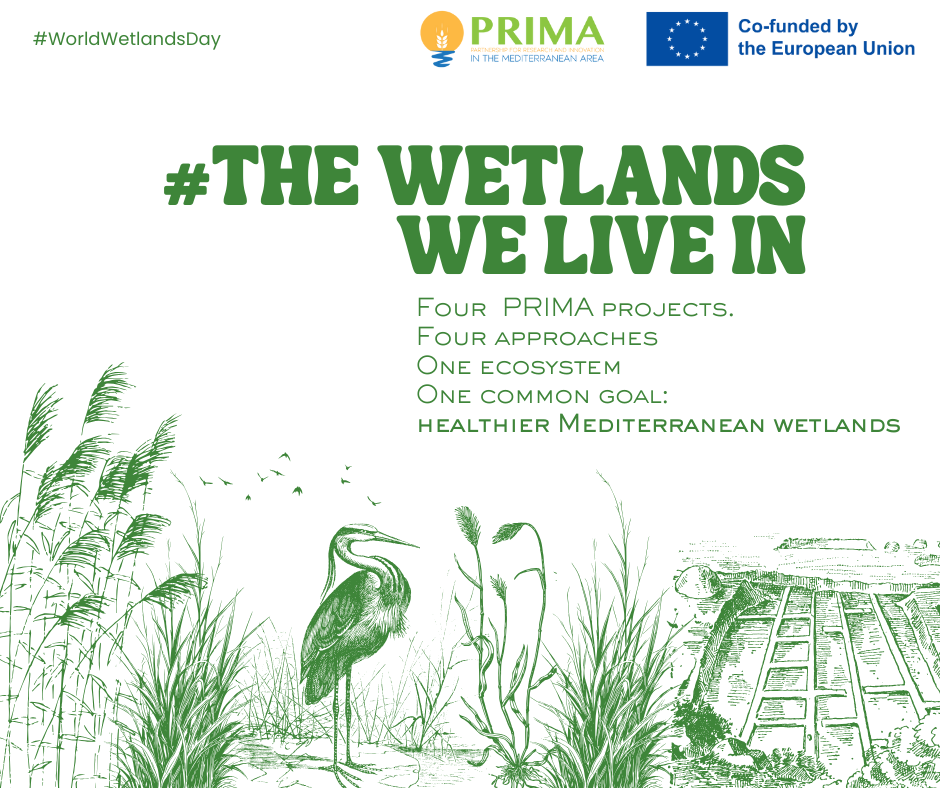
Four projects were selected. Four very different approaches to the same challenge.
Halophytes? Carbon credits? IoT sensors in rice paddies? If these sound disconnected from wetlands, today we’re decoding this jargon with these four PRIMA projects recently selected.
These four projects form a comprehensive wetlands strategy: HALO-FORCE develops new crops for degraded land, ReMEDI reimagines existing agriculture as ecosystem restoration, WetAgriMed provides the technology and governance to manage it all sustainably and WETCARB creates the economic incentives to make it last.
Preserving Mediterranean wetlands is ultimately about preserving water, its availability, its quality, and its role as the backbone of resilient farming systems and healthy ecosystems.
Four Projects, one ecosystem approach
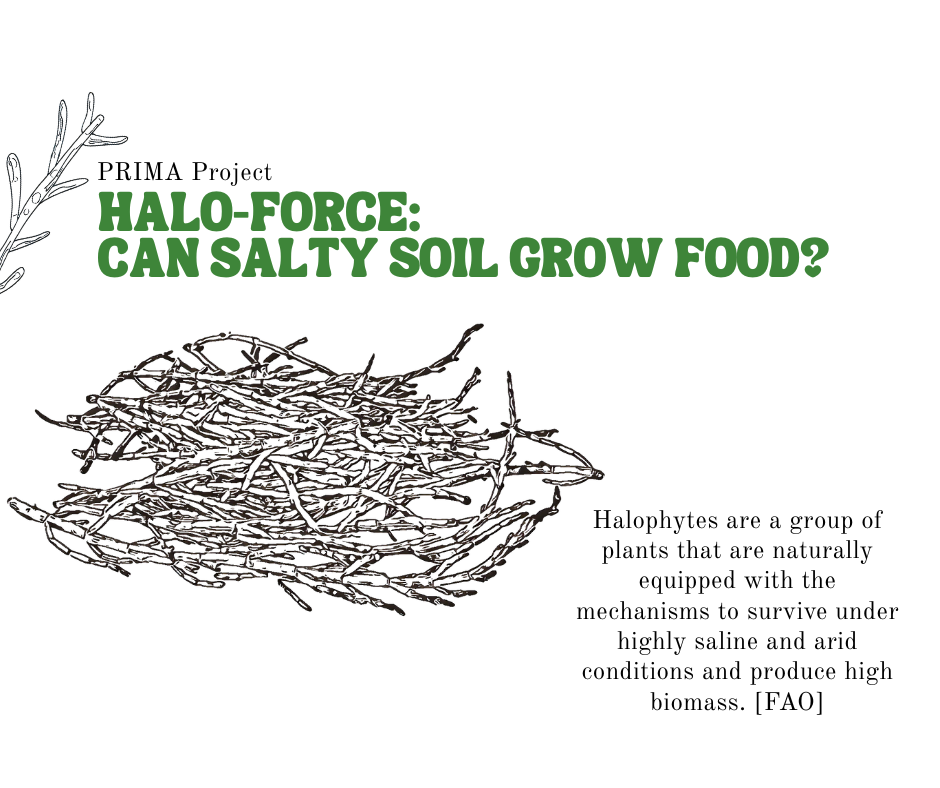
1. HALO-FORCE: Turning salt into opportunity
The challenge: Coastal wetlands degraded by saltwater intrusion
The solution: New salt-tolerant crops from wild plants
Where most see ruined farmland, HALO-FORCE sees potential. The project scouts Mediterranean coastlines for halophytes, wild plants that thrive in salty conditions, and develops them into nutritious crops. By combining genetic analysis, nutrient profiling, and farmer trials across eight countries, HALO-FORCE transforms the biggest threat to coastal agriculture (salinity) into its greatest asset: climate-resilient crops that restore degraded wetlands while feeding communities.
Why It Matters: Many coastal areas have salty, degraded soil where normal crops won’t grow. These wild plants naturally thrive there, and many are packed with nutrients. The project wants to identify the best varieties and turn them into practical farming options.
The expected impact: If successful, farmers in coastal areas could grow nutritious crops using less water and fertilizer, while also helping restore wetland ecosystems. This addresses both malnutrition (“hidden hunger”) and environmental degradation in regions increasingly affected by saltwater intrusion and climate stress.
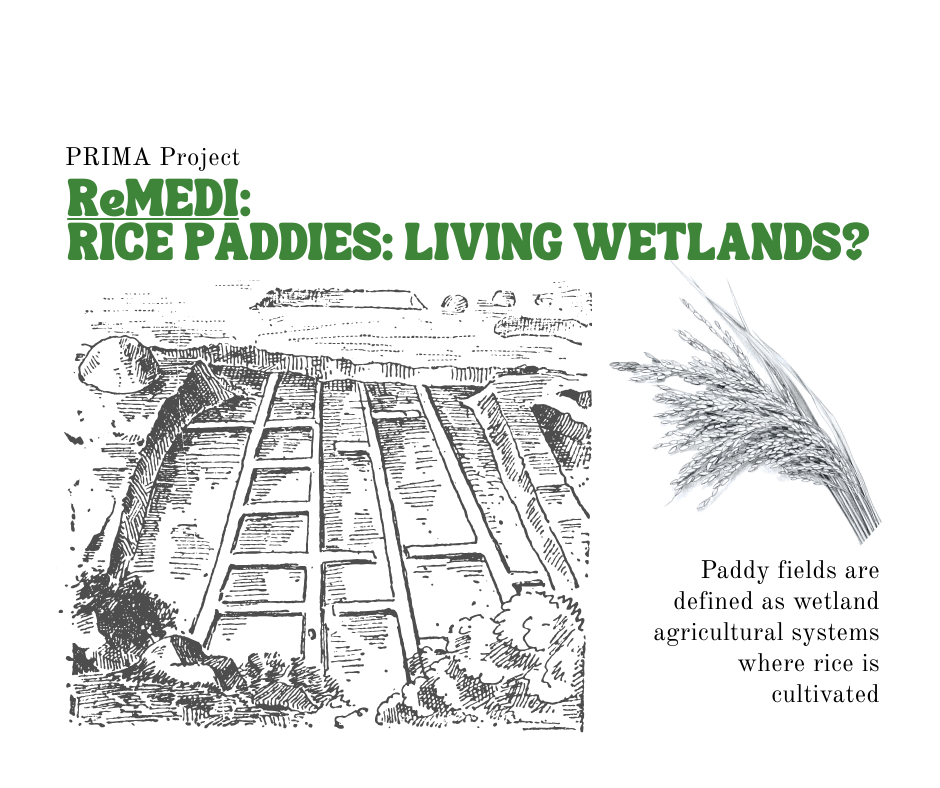
2. ReMEDI: Rice Paddies as living wetlands
The Challenge: Separating agriculture from nature destroys both
The Solution: Treating rice paddies and wetlands as one ecosystem
ReMEDI asks a radical question: what if rice paddies are wetlands? Through living labs in Spain, Egypt, Italy, and Turkiye, the project proves that organic rice farming can support biodiversity, store carbon, and produce food simultaneously. By mimicking natural wetland cycles through rotational flooding and wildlife corridors, ReMEDI shows that the most productive agricultural landscapes can also be the most ecologically rich.
Why It Matters: Mediterranean rice-growing regions face climate change, biodiversity collapse, and water shortages. Traditional farming often uses heavy chemicals that damage water quality and wildlife. Rice paddies are actually wetland ecosystems that could support birds, store carbon, and filter water, but only if managed differently. These are some of the most productive yet threatened landscapes in the Mediterranean.
The expected impact: Farmers get viable organic methods that work with nature instead of against it. Wetlands regain their ecological functions, cleaner water, wildlife habitat, carbon storage. The project produces policy recommendations for the EU Green Deal and Nature Restoration Law, helping scale these practices region-wide.
3. WetAgriMed: Smart Technology meets natural cycles
The Challenge: Managing resources efficiently without losing ecological function
The Solution: AI-powered monitocarbonring & nature-based practices
Can sensors and algorithms serve nature instead of replacing it? WetAgriMed wants to prove they can. The project deploys IoT networks and AI across Mediterranean sites to monitor water, soil, and emissions in real-time, then uses this data to optimize agroecological practices like constructed wetlands and beneficial bacteria. By combining digital precision with ecological wisdom, WetAgriMed gives farmers the tools to work with wetland cycles, not against them.
Why It Matters: Mediterranean wet agriculture faces water scarcity, soil salinity, greenhouse gas emissions, and ecological degradation. Farmers need better tools to manage resources efficiently while maintaining productivity, but solutions must work across diverse climates, cultures, and governance systems on both sides of the Mediterranean.
Expected impacts: Farmers gain AI-powered digital tools for smarter resource management alongside validated nature-based practices that reduce water use, control salinity, and cut emissions. The project produces governance frameworks and policy recommendations scalable across the Mediterranean. Through joint supervision of graduate students across institutions, WetAgriMed builds lasting North-South research partnerships while transforming wet agriculture into a climate-resilient, ecologically sound sector.
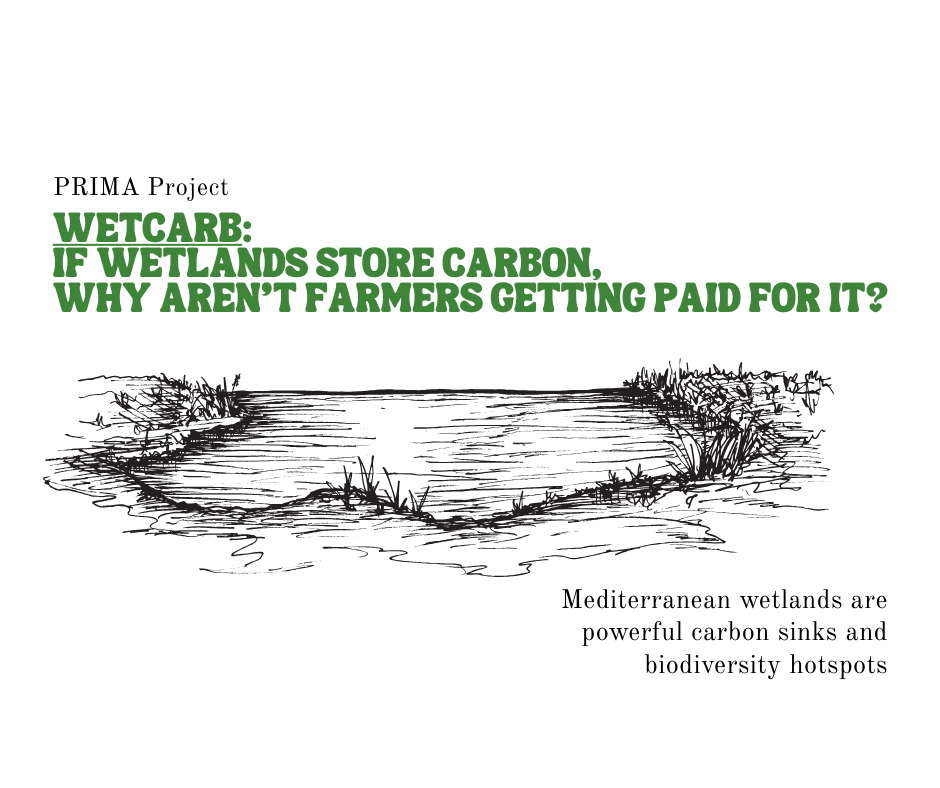
4. WETCARB: Making Conservation Pay
The Challenge: Farmers can’t afford to protect wetlands
The Solution: Carbon markets that reward ecosystem services
If wetlands store carbon, why aren’t farmers getting paid for it? WETCARB creates the missing link: a system to measure, verify, and monetize the carbon Mediterranean wetlands store. Using drones and ground sensors, the project quantifies wetlands’ climate value and helps over 50 farmers access carbon markets. For the first time, protecting wetlands becomes economically viable, turning conservation from a cost into an income stream.
Why It Matters: Mediterranean wetlands are powerful carbon sinks and biodiversity hotspots, but farmers can’t currently benefit financially from the carbon their land stores because there’s no reliable way to measure and certify it. This means wetlands remain undervalued and underprotected, despite their climate mitigation potential. Farmers need new income streams to make wetland conservation economically viable.
Exepcted impacts: Farmers gain new income from carbon credits while maintaining productive farms, making wetland conservation financially sustainable. Wetlands are protected and enhanced as carbon sinks and biodiversity havens. The MRV system and digital platform provide the infrastructure for scaling carbon markets across the Mediterranean, supporting EU climate and nature restoration goals while strengthening rural livelihoods and contributing to climate mitigation.